
Bending Without Breaking | Ikebana Techniques

I remember the first time I tried to persuade a branch to curve. I had the confidence of a person who has watched three tutorials and believes they now speak fluent wood. I pressed, it protested, I insisted, and the branch replied with a crisp snap that could be heard in the next room. Lesson delivered, no translator required.

Since then I have discovered that bending is not a feat of strength but a small act of manners. Hands together, look at your branch, concentrate. Before anything moves, I quiet the noise inside and feel for its rhythm.
Wood has its own grammar: a sentence of tension, a comma of give, and if you rush to the full stop you will hear that familiar snap again.

The rhythm is simple. I place my hands, I breathe, and I let my eyes follow the line that already exists. The branch is never a blank page. It arrives with a history of wind and weather, of the place it grew, of how much sun it learned to love. If I pay attention, it tells me where a curve might live. If I ignore it, it reminds me to start over.

What surprises me is how this tiny ritual changes the room. The moment I quiet down, time loosens. The branch softens a little. I soften a little. It becomes a conversation rather than a wrestling match. And really, who wins a wrestling match with a twig.

People ask for tips and I am tempted to give a list, but it always comes back to the same few words. Be focused. Do not talk. Listen. Feel. Hands together. Look at your branch. Concentrate. The rest follows.
Next time you pick up a stem, wait a heartbeat before you act. Let your breath find the curve that is already there. Bend with it, never against its will. You may find something quietly unbreakable in yourself too.
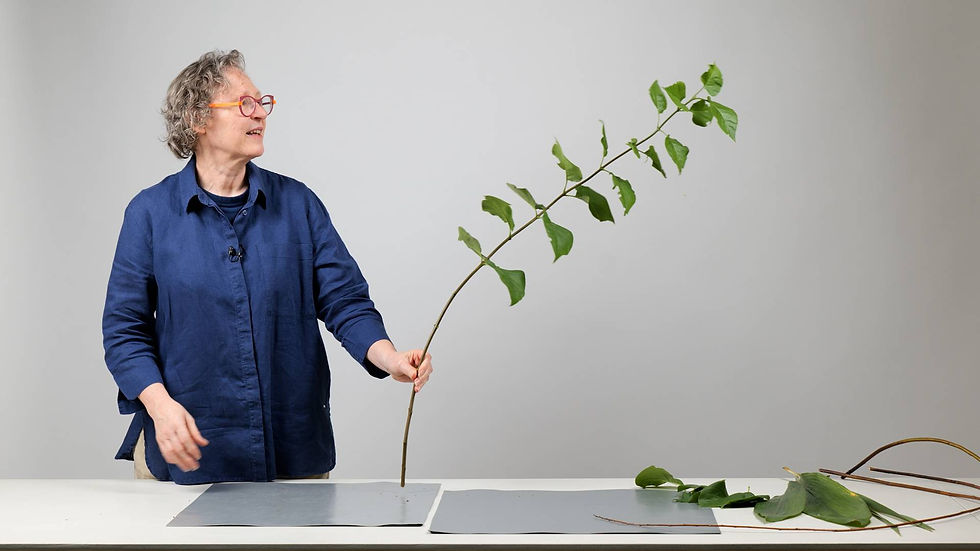
Would you like to learn how to use curved branches in your arrangements? Check out my Video Channel, click here.


Comments